首页 > 医疗资讯/ 正文
 英文摘要
英文摘要
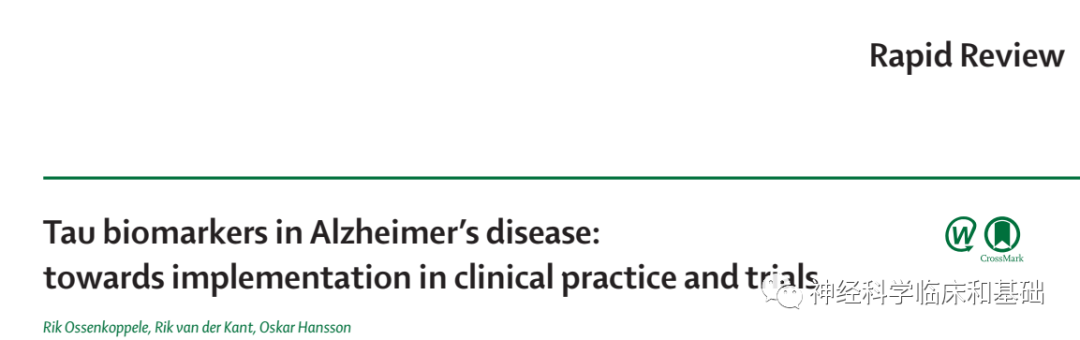
Background: Deposition of tau aggregates is a pathological hallmark of Alzheimer's disease that is closely linked both spatially and temporally to emergence of neurodegeneration and manifestation of clinical symptoms. There is an urgent need for accurate PET, CSF, and plasma biomarkers of tau pathology to improve the diagnostic process in clinical practice and the selection of participants and monitoring of treatment effects in trials.
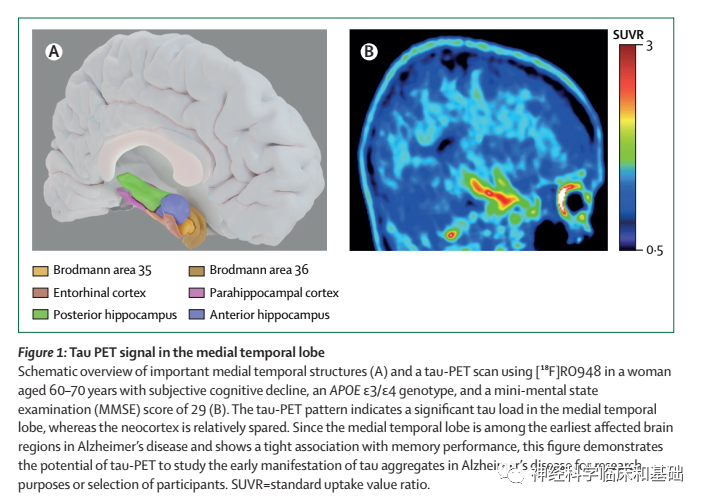
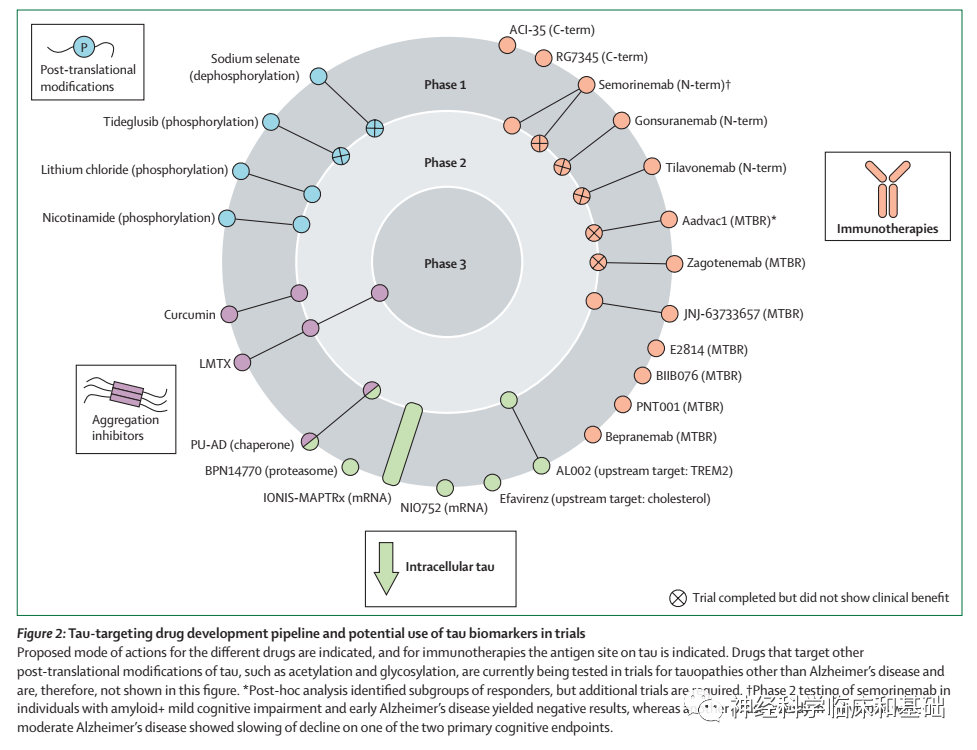
Recent developments: Innovative second-generation tau-PET tracers with high affinity and selectivity to tau pathology in Alzheimer's disease have enabled detection of tau pathology in medial temporal lobe subregions that are affected in the earliest disease stages. Furthermore, novel but common tau spreading subtypes have been discovered using tau-PET, suggesting much greater interinpidual differences in the distribution of tau pathology across the brain than previously assumed. In the CSF biomarker field,novel phosphorylated tau (p-tau) assays have been introduced that better reflect tau tangle load than established CSF biomarkers of tau pathology. The advent of cost-effective and accessible blood-based biomarkers for tau pathophysiology (ie, p-tau181, p-tau217, and p-tau231) might transform the Alzheimer's disease field, as these biomarkers correlate with post-mortem Alzheimer's disease pathology, differentiate Alzheimer's disease from other types of dementia, and predict future progression from normal cognition and mild cognitive impairment to Alzheimer's disease. In controlled investigational settings, improvements in tau-PET and biofluid p-tau markers have led to earlier disease detection, more accurate diagnostic methods, and refinement of prognosis. The anti-tau therapy landscape is rapidly evolving, with multiple ongoing phase 1 and 2 trials of post-translational modification of tau, tau immunotherapy, tau aggregation inhibitors, and targeting production of tau and reduction of intracellular tau levels. Neuroimaging and biofluid tau markers hold potential for optimising such clinical trials by augmenting participant selection, providing evidence of target engagement, and monitoring treatment efficacy. WHERE NEXT?: Major challenges to overcome are the high cost of tau-PET, partial sensitivity to detect early-stage Alzheimer's disease pathology, and off-target tracer binding. Prospective validation studies of biofluid p-tau markers are needed, and assay-related preanalytical and analytical factors need further refinement. Future studies should focus on demonstrating the diagnostic and prognostic accuracy of tau biomarkers-blood-based markers in particular-in non-tertiary settings, such as primary care, which is characterised by a perse population with medical comorbidities. Large-scale head-to-head studies are needed across different stages of Alzheimer's disease to determine which tau biomarker is optimal in various clinical scenarios, such as early diagnosis, differential diagnosis, and prognosis, and for aspects of clinical trial design, such as proving target engagement, optimising participant selection, and refining monitoring of treatment effects.
 中文摘要
中文摘要
背景:Tau聚集体的沉积是阿尔茨海默病的病理特征,在空间和时间上与神经变性的出现和临床症状的表现密切相关。目前临床上迫切需要精确的PET、CSF和血浆tau病理学生物标记物,以改进临床实践中的诊断过程,以及对试验中参与者进行选择和治疗效果的监测。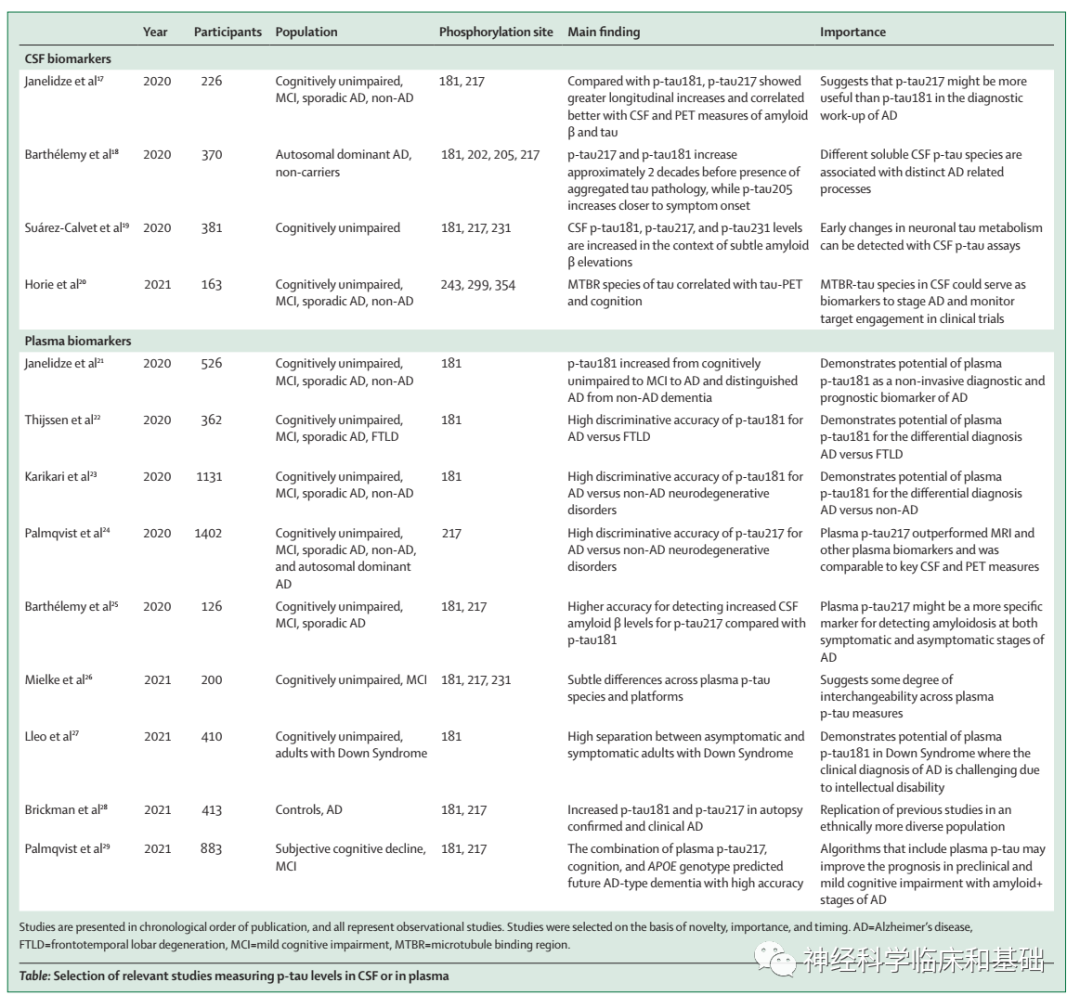 最近的发展:创新的第二代tau-PET示踪剂对阿尔茨海默病中的tau病理具有高亲和力和高选择性,能够检测到在疾病早期受影响的内侧颞叶区的tau蛋白病变。此外,使用tau-PET发现了新的且常见的tau病理播散亚型,这表明tau病理在大脑中的分布在个体间的差异要比先前假设的大得多。在脑脊液生物标记物领域,科学家已经引入了新的磷酸化Tau(p-tau)分析方法,比已建立的Tau病理学脑脊液生物学标记物更能反映tau缠结的病理负荷。针对Tau病理生理学(即p-tau181、p-tau217和p-tau231)的具有成本效益且易于获取的血液生物标记物的出现可能会改变阿尔茨海默病领域,因为这些生物标记物与死后阿尔茨海默病病理学相关,将阿尔茨海默病与其他类型的痴呆区分开来,并预测从正常认知和轻度认知障碍到阿尔茨海默病的转变。在受控试验环境中,tau-PET和生物体液p-tau标记物的改进促进了疾病的早期检测、准确诊断和精确预后。抗Tau疗法的前景正在迅速发展,目前正在进行多个关于Tau翻译后修饰、Tau免疫疗法、Tau聚集抑制剂、靶向生成Tau和降低细胞内Tau水平的第1和第2阶段试验。神经影像学和生物体液tau标记物通过促进参与者选择、提供靶点和监测治疗效果,具有优化此类临床试验的潜力。
 Tau蛋白研究的未来:在这个领域,要克服的主要挑战是tau-PET的高成本、检测早期阿尔茨海默病病理学的部分敏感性以及非靶向示踪剂结合。需要对生物体液p-tau标记进行前瞻性验证研究,需要进一步完善分析前和分析中的混杂因素。未来的研究应侧重于证明tau生物标记物中基于血液的标记物的诊断和预后准确性,尤其是在非三级诊疗环境中,如初级保健,其特点是具有不同的医学共病人群。未来需要在阿尔茨海默病的不同阶段进行大规模的头对头研究,以确定哪种tau生物标记物在哪个临床阶段中是最佳的,例如早期诊断、鉴别诊断和预后。此外,也需要确定其在临床试验设计方面的价值,例如证明靶点参与度、优化参与者选择和完善治疗效果监测。
- 搜索
-
- 1000℃西南大学/Biomaterials:可见光响应阳离子化光动力纳米颗粒整合丝素蛋白纳米纤维基质通过增强ROS利用促进感染创面愈合
- 1000℃空军军医大学Biomaterials:增强压电胶原各向异性支架通过电-拓扑协同信号促进骨骼肌再生
- 1000℃南方医科大学Biomaterials:光热-压电双响应抗菌假体界面调控施万细胞表型转化促进感染性骨缺损修复
- 1000℃南京大学Biomaterials:生物硅纳米笼可注射水凝胶捕获内源性TGF-β1用于原位透明软骨再生
- 1000℃Nat Genet | 刘斯洋/魏凤香/张铨富等绘制人类妊娠动态遗传图谱,揭示妊娠表型的特异性遗传效应
- 1000℃华南理工大学,最新Biomaterials:3D打印仿生海绵体联合间充质干细胞通过免疫微环境重塑修复雄性猪勃起功能
- 1000℃内蒙古大学AM:一种协同工程的蛋白质水凝胶,整合拓扑强化和金属离子协调,用于糖尿病伤口修复
- 1000℃同济大学附属东方医院Biomaterials:钒单原子催化剂通过GPR110依赖性巨噬细胞极化介导脓毒症肠损伤治疗
- 精J Child Psychol Psychiatry:12种罕见神经发育障碍儿童沟通能力谱系
- 精研究发现:爱吃辣的人,心血管病和癌症死亡风险都会显著降低
- 精Nursing in Critical Care:别再指责护士了!ICU 里被遗漏的护理,根源在系统而非个人
- 精Acta Obstet Gynecol Scand:罕见病女性的妊娠并发症与母婴结局,一项单中心434种罕见病的回顾性队列研究
- 精【爱儿小醉】儿科患者术前对流层臭氧暴露与围手术期呼吸系统不良事件之间的关系:一项单中心回顾性队列研究
- 精eBioMedicine:牙龈下微生物组与脑健康存在连续关联梯度,牙周炎或成认知衰退可干预靶点
- 精军事医学研究院《自然·通讯》:自适应IrPtCu纳米酶水凝胶实现耐药菌感染伤口序贯治疗
- 精能够逆转萎缩性胃炎的两个中成药,该怎么选择?
- 荐同时性多发性原发性肺癌,左右病灶分别为EGFR和ALK阳性,考虑淋巴结肿大仅局限左肺门及血浆EGFR阳性,采用奥希替尼联合化疗
- 荐40岁女性同时罹患卵巢支持细胞-间质细胞瘤和透明细胞乳头状肾肿瘤,WES等基因检测竟为阴性
- 荐椎管内麻醉使用止血药突发气道痉挛的抢救流程解析
- 荐女子肝区无任何不适,影像提示复杂囊性病变,层层鉴别后锁定罕见胆管源性囊性肿瘤
- 荐“绘”真报告 | 病理考虑为中枢神经细胞瘤,检出脑室外神经细胞瘤的特征性变异FGFR1-TACC1融合,辅助鉴别诊断
- 荐8岁女童出现男性化症状,竟是形似「性索-间质肿瘤」的卵巢「无性细胞瘤」所致,少见KRAS/CDK4共扩增或与侵袭性有关
- 荐17例病例分析揭示常见于中年人的色素性室管膜瘤临床特征与预后,分子检测可助力临床精准诊疗
- 荐Lancet Oncol:结直肠癌腹膜转移,围手术期化疗并非必选项
- 标签列表
-
- 星座 (702)
- 孩子 (526)
- 恋爱 (505)
- 婴儿车 (390)
- 宝宝 (328)
- 狮子座 (313)
- 金牛座 (313)
- 摩羯座 (302)
- 白羊座 (301)
- 天蝎座 (294)
- 巨蟹座 (289)
- 双子座 (289)
- 处女座 (285)
- 天秤座 (276)
- 双鱼座 (268)
- 婴儿 (265)
- 水瓶座 (260)
- 射手座 (239)
- 不完美妈妈 (173)
- 跳槽那些事儿 (168)
- baby (140)
- 女婴 (132)
- 生肖 (129)
- 女儿 (129)
- 民警 (127)
- 狮子 (105)
- NBA (101)
- 家长 (97)
- 怀孕 (95)
- 儿童 (93)
- 交警 (89)
- 孕妇 (77)
- 儿子 (75)
- Angelababy (74)
- 父母 (74)
- 幼儿园 (73)
- 医院 (69)
- 童车 (66)
- 女子 (60)
- 郑州 (58)